
Stripe Startup: Why It Still Dominates Fintech

Stripe Startup: Why This Fintech Giant Still Feels Like One of the Most Important Private Tech Companies
Stripe has been around longer than the newest AI startups dominating headlines, but that does not make it any less relevant. In fact, Stripe may be one of the clearest examples of a startup that grew beyond its original category without losing the speed, ambition, and product focus that made it famous in the first place.
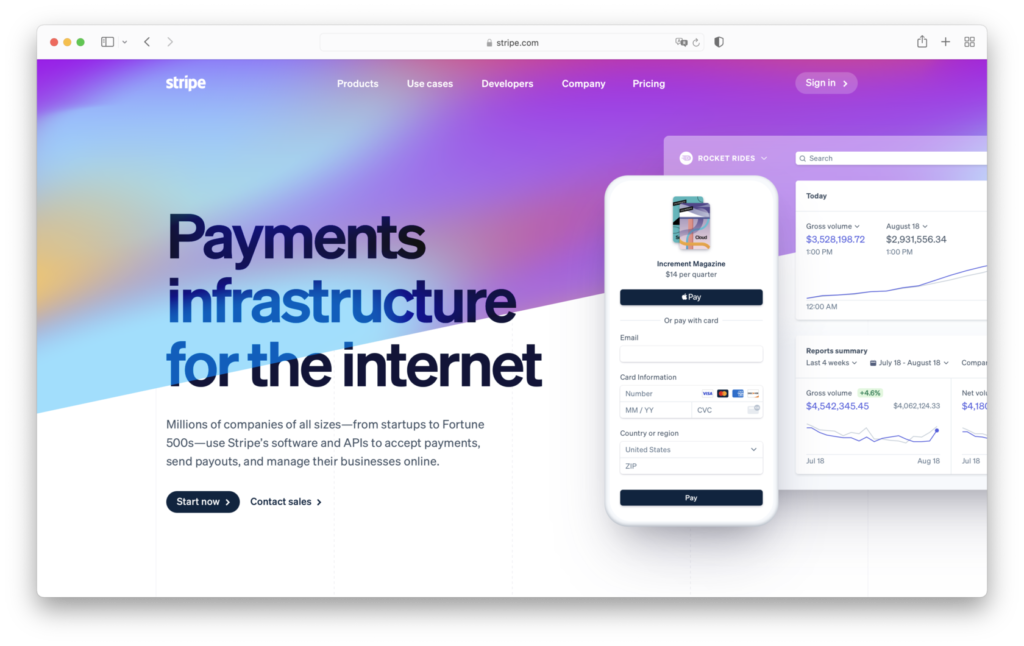
Most people still think of Stripe as a payments company. That is true, but incomplete. Stripe is really building financial infrastructure for the internet. Payments are the entry point. The bigger story is everything that sits around them: billing, revenue automation, fraud prevention, money movement, global commerce, and increasingly, tools connected to AI and stablecoins. Stripe says it processed $1.4 trillion in payments volume in 2024, and Reuters reported that its valuation reached $159 billion in a February 2026 employee tender offer.
Stripe : https://stripe.com/
What Stripe actually does
At its core, Stripe helps businesses accept payments online. That sounds simple, but the appeal of Stripe has always been that it turned a painful technical problem into a smoother developer product. Instead of forcing internet businesses to wrestle with fragmented banking systems and clunky integrations, Stripe made payments programmable.
That foundation let the company expand into a much wider financial stack. Today, Stripe offers billing, fraud tools, tax products, treasury-related features, and cross-border commerce infrastructure. It is no longer just useful for startups. It is used by much larger companies too, and Reuters says its customers include major AI firms, Amazon, Hertz, Instacart, X, and 80% of the Nasdaq 100.
Why Stripe still matters so much
The easy lazy take is that Stripe is old news because it is no longer a “hot new startup.” That misses the real point.
Stripe matters because it sits underneath a huge part of internet business. When a company wants to launch subscriptions, process recurring revenue, expand internationally, or reduce fraud, Stripe is often in the conversation. Infrastructure businesses can look less flashy than consumer apps, but they often become more durable because they are embedded in how companies operate.
That durability is exactly why Stripe remains one of the most important private companies in tech. Reuters reported that the company is strongly profitable, while still investing heavily in product development and acquisitions. That combination matters. Plenty of startups can grow fast. Far fewer can grow fast, remain strategically important, and generate serious profits at scale.

Stripe’s new bet: AI and stablecoins
Stripe’s newest chapter is especially interesting because it is trying to attach itself to the next internet platform shift.
In 2025, Stripe announced new products around AI commerce and stablecoins, including the Agentic Commerce Protocol with OpenAI and what it described as the first AI foundation model for payments. Stripe has also been pushing AI features across fraud, growth, and money movement, while framing stablecoins as part of a faster global payments future.
This is strategically smart. Payments alone are important, but AI agents, automated checkout, and internet-native money rails could become much bigger growth drivers over the next few years. Stripe is clearly trying to avoid the trap of becoming a mature fintech that merely defends its old business. It wants to shape the next one too.
The business case for Stripe’s strength
Stripe’s biggest advantage is not just technology. It is position.
It sits between merchants, software platforms, online marketplaces, and the banking system. That position gives it data, distribution, and product expansion opportunities. Stripe says its AI systems are powered by more than $1 trillion in payments signal, and that scale helps it improve fraud detection and performance. That matters because payments is one of those markets where small improvements create huge financial outcomes.
This is also why Stripe remains so hard to displace. Even when competitors offer cheaper pricing or niche features, businesses often hesitate to switch because payments infrastructure is deeply embedded into checkout, billing, compliance, reporting, and finance workflows.
The risks Stripe faces
Stripe is still a powerful company, but it is not untouchable.
The first risk is competition. Adyen, PayPal, Block, Braintree, and many region-specific processors all compete in different segments. The second is margin pressure. Payments can look massive from the outside, but margins are not always simple once you factor in fraud, compliance, banking relationships, and international complexity.
The third risk is category drift. Stripe is expanding into many directions at once: payments, billing, AI commerce, stablecoins, financial operations. That can be a strength, but it can also dilute focus if too many bets fail to become major businesses.
Can Stripe stay a startup story?
In practical terms, Stripe already looks more like a tech institution than a scrappy startup. But editorially and strategically, it still behaves like a startup because it keeps expanding into new infrastructure layers instead of settling into one category.
That is what makes Stripe such an important company to watch. It is not just processing online payments. It is trying to define how internet businesses get paid, automate finance, and transact in a world shaped by AI.
Final thoughts
Stripe is one of the most important startups of the modern internet era because it built a product category, then expanded far beyond it. Its latest valuation, profitability, and push into AI commerce and stablecoins show that it is still evolving, not coasting.
If Stripe succeeds in connecting payments, automation, and AI-driven commerce, it will remain far more than a fintech success story. It will stay one of the core infrastructure companies of the internet economy.