
NVIDIA RTX 5090 vs RTX 4090: Gaming Performance Showdown
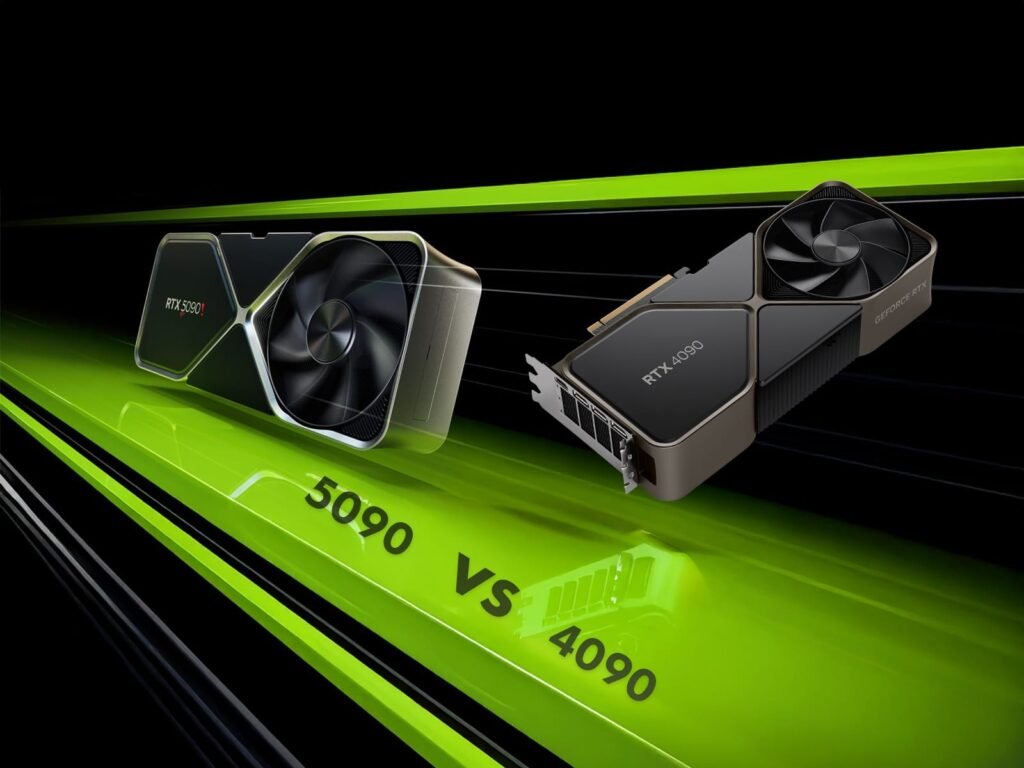
If you’re deciding between the RTX 5090 and RTX 4090, don’t start with “Which is faster?” Start with “What do I want to play, at what resolution, and how much do I care about ray tracing, DLSS, and VRAM headroom?” The RTX 5090 is clearly the new top dog, but the RTX 4090 can still be the smarter buy depending on pricing and your monitor.
This comparison uses official NVIDIA specs plus reputable benchmark roundups.
The 10 second summary
- Buy RTX 5090 if you game at native 4K, use ray tracing/path tracing, want 32GB VRAM, and plan to keep the GPU for years.
- Buy RTX 4090 if you can get it meaningfully cheaper and you’re fine using DLSS at 4K or you mainly play at 1440p where the 4090 is already overkill.
If you’re also comparing next gen flagships, check our breakdown of iPhone 17 Pro Max vs Galaxy S26 Ultra for a forward looking view on what changes year to year: https://limitedtime.co/iphone-17-pro-max-vs-galaxy-s26-ultra/
Core specs: the real upgrade is memory and throughput
On paper, both are “halo GPUs,” but the 5090 pushes harder in the areas that matter for next gen rendering.
RTX 5090 highlights
- 32GB GDDR7 memory
- 512 bit memory bus (huge for bandwidth hungry workloads)
- Blackwell architecture, with higher RT and Tensor resources than 4090
RTX 4090 highlights
- 24GB GDDR6X memory
- 384 bit memory bus
- Ada Lovelace architecture, still extremely strong in raster and ray tracing
Translation: if you’re pushing 4K textures, heavy RT, mods, or creator workloads, the 5090’s 32GB and bandwidth are not marketing fluff. They reduce stutter risk and increase longevity.
Real world gaming performance: how big is the gap?
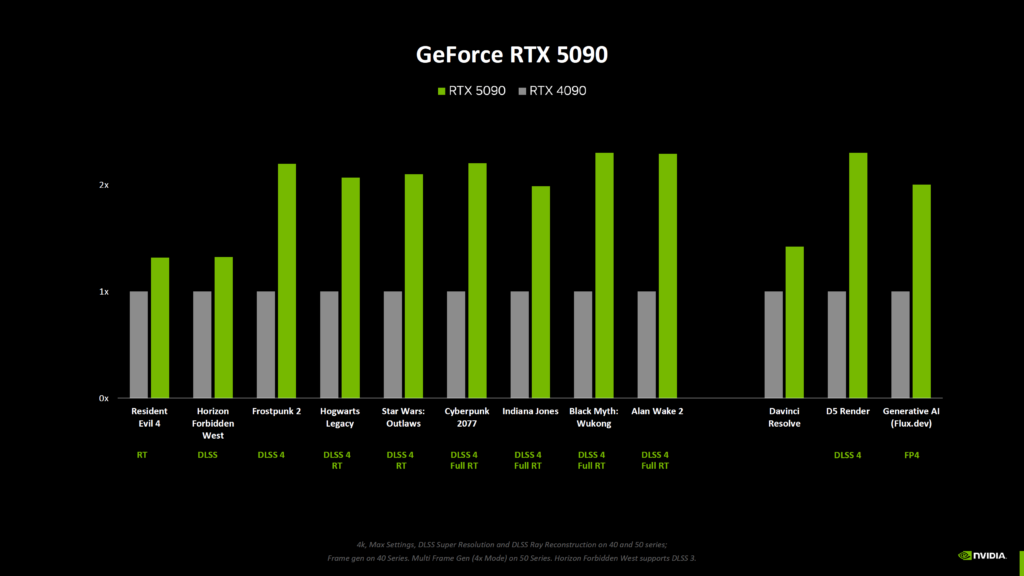
Across multi game native 4K testing, the RTX 5090 is commonly reported as roughly around one third faster overall than the RTX 4090, but the per game gap swings a lot.
What that actually means:
- In games where the 4090 already delivers 100+ FPS at 4K, the 5090’s uplift is mostly “nice to have.”
- In heavy modern titles, that uplift can be the difference between “playable without compromises” and “you need aggressive upscaling.”
If you play competitive shooters, a lot of them are CPU limited long before either GPU taps out, so buying the absolute top GPU is often wasted money unless you’re also on a high end CPU and high refresh monitor.
Ray tracing and path tracing: where the 5090 makes more sense
This is the biggest practical reason to upgrade.
Path tracing can crush even top tier GPUs, and modern games increasingly use it as the “max settings flex.” Reports show that even an RTX 5090 may still need DLSS and frame generation to keep path tracing smooth in demanding titles.
So why is 5090 still the better buy for RT focused players?
- It gives you more headroom before you’re forced to drop settings.
- It’s more future proof as path tracing becomes more common.
- More VRAM helps when RT plus high res textures stack memory use.
If you rarely enable RT because you prefer high FPS, the 4090 becomes even more attractive at the right price.
VRAM and future proofing: 32GB vs 24GB is not trivial
For most games today, 24GB is already plenty. But “plenty” changes fast at 4K with ultra textures, high resolution mods, and new rendering techniques. The 5090’s 32GB GDDR7 is the kind of spec that keeps a card feeling high end longer.
This is also where the 5090 is better for creators: higher memory and bandwidth help with large scenes, AI workflows, and heavier timelines. Even if you only care about gaming, resale value tends to hold up better when VRAM is abundant.
Power, heat, and the hidden cost of “faster”
Here’s the part people ignore: the fastest GPU is rarely the cheapest GPU to run.
Even the RTX 4090 is a 450W class card.
With the 5090, you should assume:
- more heat to move out of your case
- more stress on your PSU and cabling
- more noise if your case airflow is weak
Actionable rule: if your case airflow is average, budget for better fans or a better case before you drop money on a flagship GPU. Otherwise you pay for performance you can’t sustain quietly.
Price and value: the only question that matters
NVIDIA lists the RTX 5090 starting at $1,999.
But real street pricing can be chaotic depending on supply. In periods of scarcity, high end GPUs get “taxed” hard by retailers and resellers.
Decision rule:
- If the 5090 costs only a bit more than a new 4090 where you live, take the 5090.
- If the 4090 is massively cheaper, the 5090’s advantage may not justify the extra spend unless you’re specifically targeting 4K RT or path tracing.
Bottom line
- RTX 5090 is the better long term 4K GPU, especially for ray tracing, path tracing, and VRAM headroom.
- RTX 4090 is the value play if you can buy it at a strong discount and you’re happy leaning on DLSS at 4K or mainly gaming at 1440p.
If you’re trying to justify the 5090 while you game at 1440p 165Hz and rarely use RT, that’s confirmation bias. You want it because it’s the best, not because you need it.