
Apple Watch Series 10 vs Galaxy Watch 7: Smartwatch Showdown
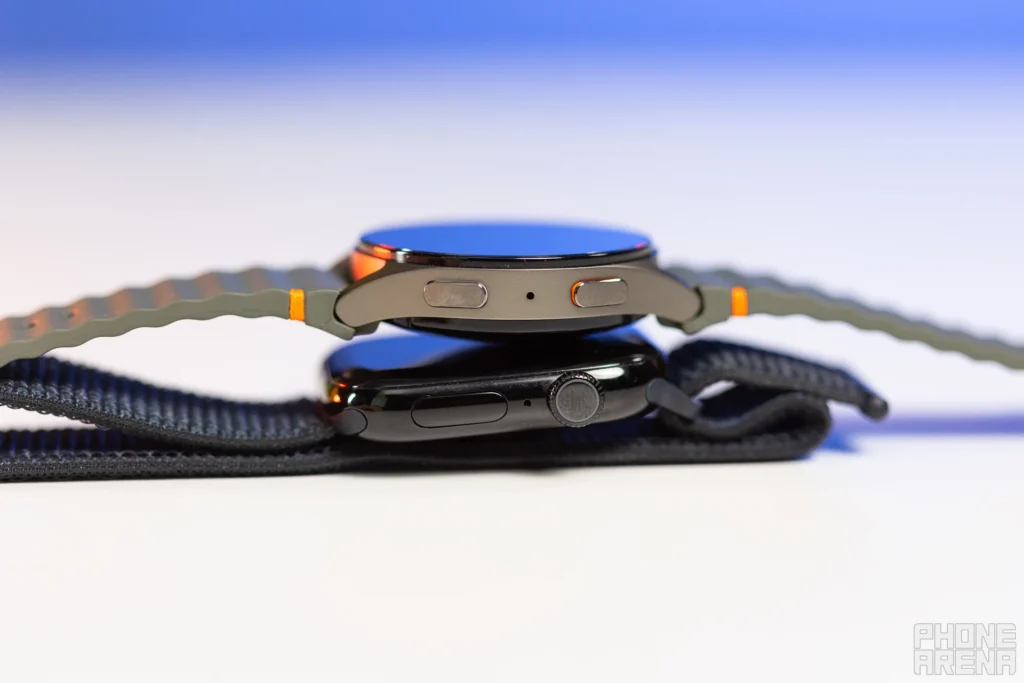
If you’re choosing between Apple Watch Series 10 and Galaxy Watch 7, stop treating it like a pure spec fight. The real decision is ecosystem, health features you’ll actually use, and battery expectations. One is built to be the best iPhone companion. The other is the best Wear OS daily driver for Android, especially if you’re already in Samsung land.
This comparison uses Apple’s official Series 10 tech specs and announcement, plus Samsung’s official Galaxy Watch7 specs page.
The 10 second summary
- Buy Apple Watch Series 10 if you have an iPhone, want Apple’s best “mainline” Watch hardware, and care about features like sleep apnea notifications, fast charging, and Apple’s health app integration.
- Buy Galaxy Watch 7 if you’re on Android (especially Samsung), want Wear OS flexibility, and prefer Samsung’s health insights like Energy Score plus Dual Frequency GPS.
If you’re also comparing next-gen flagships, see iPhone 17 Pro Max vs Galaxy S26 Ultra for what changes year to year.
Link: https://limitedtime.co/iphone-17-pro-max-vs-galaxy-s26-ultra/
Design and display: both premium, different priorities
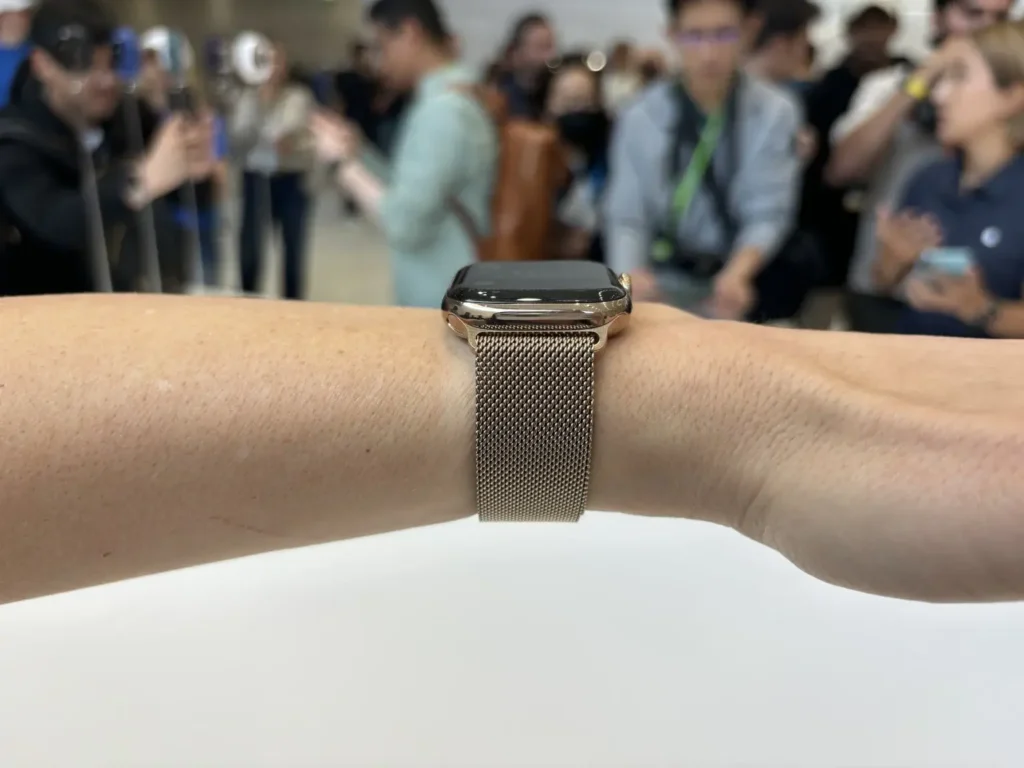
Apple Watch Series 10 comes in 42mm and 46mm, with a thinner profile (9.7mm depth) and an always on LTPO3 OLED “wide angle” display designed to be up to 40% brighter at an angle. It also reaches up to 2000 nits peak brightness.
Galaxy Watch 7 (at least in the 40mm model) uses a 1.3″ Super AMOLED display at 432×432, with a lighter body weight (Samsung lists 28.8g on the UK specs page).
Practical takeaway:
- If you want the best “glanceability” outdoors and from odd angles, Apple’s display tuning is a real advantage.
- If you want a lighter Wear OS watch that still looks premium, Watch 7 wins on comfort (especially smaller wrists).
Performance and storage: “fast enough” is not the point
Apple uses the S10 SiP (dual core) with a 4 core Neural Engine and 64GB storage.
Samsung lists a Penta Core CPU (1.6GHz/1.5GHz), 2GB RAM, and 32GB storage.
Real world difference:
- Apple’s advantage is smoothness plus deep integration with iPhone, Apple Fitness, and Apple’s health stack.
- Samsung’s advantage is Wear OS flexibility (apps, watch faces, Google services) without Apple’s platform lock.
If you’re trying to decide based on CPU speed, you’re optimizing the wrong variable.
Health tracking: both strong, but Apple goes deeper in “medical style” features
Apple Watch Series 10 includes ECG support (where available), blood oxygen sensor (availability depends on region), temperature sensor, and sleep apnea notifications. It also adds a depth gauge and water temperature sensor for swim/snorkel oriented use cases.
Galaxy Watch 7 includes a broad sensor stack (including optical heart rate and an electrical heart sensor) plus Samsung’s Bioelectrical Impedance Analysis sensor in its spec list, and it leans into “insights” features like Energy Score.
Two valid POVs:
- Utility first: Samsung’s daily insights can be more motivating because they translate data into a simple score and recommendations.
- Privacy and clinical framing: Apple tends to present features with tighter medical style disclaimers and deep Health app records, which some users trust more for long term tracking.
Fitness and GPS: Watch 7 has a clear positioning
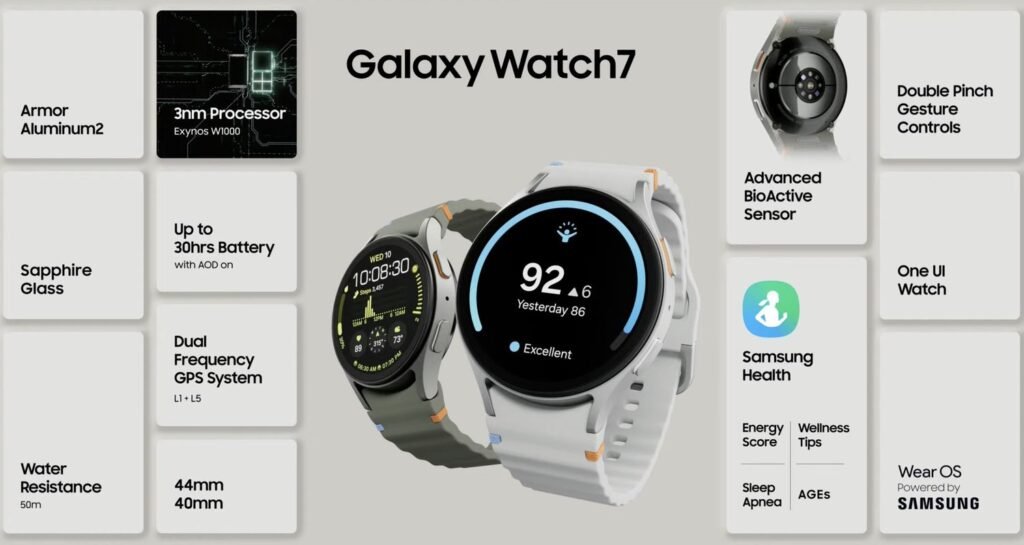
Samsung highlights Dual Frequency GPS (L1 + L5) for more consistent tracking in dense city areas, plus its updated BioActive Sensor for higher precision.
Apple Watch Series 10 is also a strong fitness tracker, but Apple’s official specs emphasize sensors and battery test methodology more than “GPS tier” marketing on the spec sheet.
If you do a lot of running in cities or travel and want stronger positioning around GPS reliability, Watch 7 is easier to justify.
Battery and charging: Apple wins charging speed, Samsung wins stated runtime
Apple rates Series 10 at up to 18 hours normal use, up to 36 hours in Low Power Mode, and 80% in about 30 minutes fast charging.
Samsung lists Watch 7 (40mm) at 300mAh and claims up to 40 hours (AOD off) or up to 30 hours (AOD on).
How to interpret this without coping:
- If you hate daily charging and want the best odds of a 2 day pattern, Galaxy Watch 7 has the stronger headline claim.
- If you’re fine charging daily but want it to be painless, Apple’s fast charging is genuinely convenient.
Compatibility: this is the hard wall
Apple Watch requires an iPhone (Apple lists iPhone Xs or later with iOS 18+).
Samsung’s Galaxy Watch7 experience is best on Android, and Samsung notes some features are limited to Samsung Galaxy phones.
So unless you plan to switch phone platforms soon, the “best” watch is mostly predetermined by your phone.
Bottom line
- Apple Watch Series 10 is the best pick for iPhone users who want top display quality, fast charging, and Apple’s newest health additions like sleep apnea notifications.
- Galaxy Watch 7 is the best pick for Android users who want Wear OS freedom, Samsung’s health insights, and strong GPS positioning with dual frequency tracking.
If you’re trying to pick Galaxy Watch 7 while you use an iPhone (or Apple Watch while you use Android), that’s not “optimizing.” That’s creating friction.