
The $700B AI Infrastructure Bet: What Big Tech Is Building
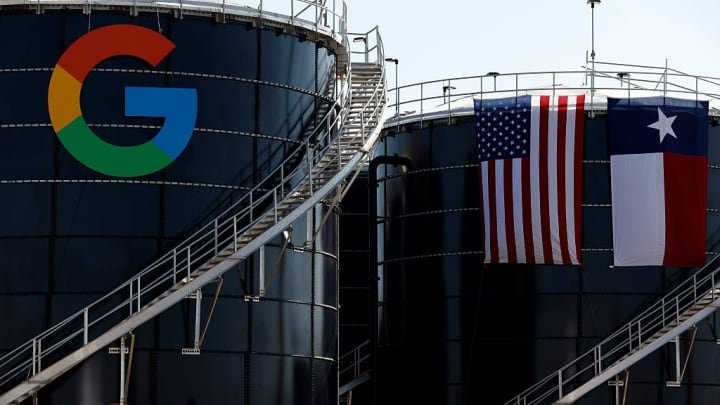
February 2026 will be studied in business schools. In a single month, the AI infrastructure industry collectively deployed more capital than most countries’ annual defense budgets. OpenAI closed a $110 billion funding round the largest private fundraise in history. Amazon, Google, Microsoft, and Meta announced combined 2026 capital expenditure plans approaching $700 billion. Anthropic closed a $30 billion Series G at a $380 billion valuation.
These aren’t venture bets on future revenue. These are infrastructure commitments measured in gigawatts and concrete. The question isn’t whether AI is being built. The question is whether anyone can actually afford what’s coming next and what happens if the returns don’t materialize fast enough.
The Scale of the Spending: By the Numbers
The four hyperscalers Amazon, Alphabet, Microsoft, and Meta — have collectively signaled 2026 capital expenditure between $635 and $700 billion, a 60–70% increase from their combined $380–410 billion in 2025. Each company’s commitment is remarkable on its own:
Amazon guided for approximately $200 billion the largest single-company figure and well above prior analyst expectations of $146 billion. Alphabet projected $175–185 billion, nearly doubling its 2025 spend. Meta forecasted $115–135 billion, up sharply from $72 billion. Microsoft guided for over $100 billion.
To put this in perspective: Amazon’s AI infrastructure spend alone exceeds what the entire US energy sector spends drilling, extracting, and delivering fuel.
What OpenAI’s $110 Billion Round Actually Means
The OpenAI round is more complex than a funding announcement. The $110 billion closed in late February 2026 was led by Amazon ($50 billion), Nvidia ($30 billion), and SoftBank ($30 billion). Critically, these aren’t passive financial investors they’re infrastructure partners.
Amazon’s investment came with a commitment for OpenAI to consume at least 2 gigawatts of AWS Trainium compute. Nvidia’s involvement includes 3 gigawatts of dedicated inference capacity and 2 gigawatts of Vera Rubin training systems. OpenAI, which reached a $730 billion pre-money valuation on this round, is now valued above almost every public company on earth.
The structure reveals what this era of AI is really about: compute supply chain control. The companies that can guarantee access to training and inference capacity at scale hold structural advantages that no amount of model architecture cleverness can overcome. Amazon, Nvidia, and SoftBank aren’t writing checks they’re each securing preferred access to OpenAI’s models embedded in their own infrastructure.
The Physical Realities: Energy, Cooling, and Land
Every gigawatt of AI compute requires power infrastructure, cooling systems, and physical space. These constraints are now as limiting as the availability of GPUs themselves.
Data centers now consume an estimated 1,050 terawatt-hours of electricity globally (estimate). Hyperscalers are striking “behind-the-meter” deals directly with nuclear plants Constellation Energy and Talen Energy have both finalized arrangements to power AI clusters directly from reactors, bypassing the grid entirely. Meta’s planned Louisiana facility will cover a footprint comparable to most of lower and midtown Manhattan combined.
Water is an underappreciated constraint. GPU clusters run at temperatures that require large volumes of freshwater cooling. Some communities near planned data center sites are already pushing back. This is not a hypothetical friction it is an active constraint on where AI infrastructure can be built.
Why Free Cash Flow Is About to Go Negative
Here’s the part the tech industry’s bullish coverage tends to skip: this level of capital expenditure is going to make several of the world’s most profitable companies cash-flow negative.
Amazon is projected by Morgan Stanley to see negative free cash flow of approximately $17 billion in 2026, with Bank of America estimating a deficit of $28 billion. Amazon has already signaled it may seek to raise additional equity and debt as the build-out continues. Microsoft’s free cash flow is projected to slide 28% this year. Analysts at multiple firms have begun modeling negative free cash flow for AI leaders through 2027 and 2028.
The bet is that these investments will generate returns through AI-driven cloud revenue, productivity software, and new services but the returns are on a 3–5 year horizon while the capital costs hit immediately.
Two Views on Whether This Ends Well
The optimist case: AI infrastructure is the new energy grid. The companies that built out electricity distribution in the early 20th century looked like they were overbuilding and then demand caught up and exceeded every projection. Inference demand is growing faster than supply. The companies that secure capacity now will have structural advantages for a decade. The $600+ billion being spent in 2026 is the foundation of the next industrial era.
The skeptic case: The history of technology infrastructure cycles includes overbuilding. The telecom fiber boom of the late 1990s left enormous capacity stranded when demand projections proved optimistic. AI’s productivity benefits are real but unevenly distributed and slower to materialize than infrastructure buildout timelines. If a major hyperscaler signals a pause in spending or if AI revenue growth disappoints for even one quarter the correction in semiconductor and utility valuations could be severe.
Both are intellectually serious positions. The honest answer is that no one knows which scenario plays out, and anyone claiming certainty is selling something.
What This Means for Everyone Else
The compute arms race is not just a story about big companies spending money. It is reshaping the competitive landscape for every company that uses AI:
Smaller cloud providers cannot match hyperscaler capex, accelerating consolidation of AI workloads on AWS, Azure, and Google Cloud. Startups building AI applications face a world where their infrastructure costs are controlled by a handful of companies with their own competing AI products. Countries and regions without a hyperscaler data center presence are increasingly dependent on foreign AI infrastructure for strategic applications.
The February 2026 investment wave has effectively declared that compute not algorithms, not data, not talent is the primary strategic asset in AI. Whoever controls the gigawatts controls the future.
Pingback: Perplexity AI Startup: Why It Matters in 2026
Pingback: Databricks Startup: Why This AI Data Giant Matters - Limited Time | Tech News, Reviews & Buying Guides
Pingback: Anduril Startup: Why Defense Tech Is Booming - Limited Time | Tech News, Reviews & Buying Guides