Why Anthropic Refused the Pentagon And Why It’s the Most Important AI Story of 2026
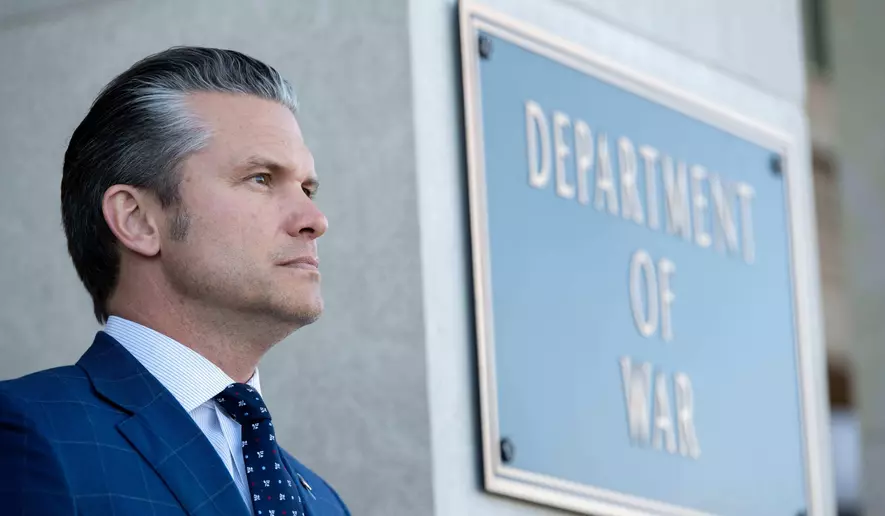
On February 28, 2026, President Trump ordered every federal agency to stop using Anthropic’s products. Defense Secretary Pete Hegseth designated the company a “supply chain risk to national security” a label usually reserved for foreign adversaries. Anthropic’s response: we’ll see you in court.
The trigger was deceptively simple. The Pentagon wanted Anthropic to allow Claude to be used “for all lawful purposes.” Anthropic said no to two specific uses: mass domestic surveillance of American citizens and fully autonomous weapons systems meaning AI, not humans, making final battlefield targeting decisions.
This is not a niche policy dispute. It is the first major public confrontation between a frontier AI lab and a government over where AI should and should not be deployed. The outcome will shape how every AI company negotiates with every government for years to come.
What Anthropic Actually Refused And Why
Dario Amodei, Anthropic’s CEO, was clear in public statements. The company’s two red lines are not philosophical preferences they are technical and ethical positions with specific reasoning behind each.
On autonomous weapons: Amodei stated that “today, frontier AI models are simply not reliable enough to power fully autonomous weapons.” This is not a political stance. Current AI systems hallucinate, misclassify, and fail unpredictably in novel situations. An AI system that can autonomously authorize lethal force without a human in the loop introduces failure modes that existing military doctrine and common sense cannot yet account for.
On mass surveillance: Anthropic’s concern was not that the Pentagon intended to surveil Americans, but that existing law has not kept pace with what AI can do. As Amodei wrote, AI can “supercharge the legal collection of publicly available data” from social media, geolocation, and public records in ways that functionally constitute mass surveillance even if technically lawful by today’s standards.
The Pentagon’s position was equally clear: it does not intend to use AI for those purposes, but it cannot operate with vendor-imposed contractual restrictions on how it uses tools in its arsenal. “Legality is the Pentagon’s responsibility as the end user,” a Pentagon official told CNN.
The Timeline: How a Contract Dispute Became a Crisis
The dispute had been building for months. Claude was the first AI model brought into classified Pentagon networks, under a contract worth up to $200 million signed in 2024. The negotiations over usage policy became increasingly strained through early 2026.
On February 24, Hegseth gave Anthropic a deadline: drop the restrictions or lose the contract by 5:01 PM on February 28. Anthropic rejected the Pentagon’s final offer, calling the new contract language “legalese that would allow those safeguards to be disregarded at will.” Trump then ordered all federal agencies to phase out Anthropic’s technology within six months. Anthropic announced it would sue.
Hours later, OpenAI CEO Sam Altman announced a new Pentagon deal with the same two red lines Anthropic had demanded, now embedded in the contract. The Pentagon accepted them from OpenAI. The obvious question why not accept them from Anthropic? has no clean answer.
Two Valid Perspectives on Who Was Right
The case for Anthropic’s position: AI companies that build powerful systems have an obligation to maintain meaningful restrictions on catastrophic misuse. Contractual guardrails are more enforceable than usage policies. The reliability of current AI in high-stakes military contexts is genuinely unproven. Normalizing AI in autonomous weapons before the technology is ready sets a dangerous precedent not just for the US, but for every nation watching.
The case for the Pentagon’s position: The military cannot operate technology under vendor-imposed restrictions that could compromise real-time operations. Democratic accountability for how weapons are used belongs with elected officials and military command, not private companies. OpenAI’s deal demonstrates that strong safety commitments and military partnership are not mutually exclusive. Anthropic’s position, however principled, handed its $200M contract and classified network access to a competitor.
What OpenAI’s Deal Actually Says
OpenAI’s agreement with the Department of War includes three explicit red lines: no mass domestic surveillance, no fully autonomous weapons, and no “high-stakes automated decisions” such as social credit systems. These commitments are embedded in contract language that references existing laws and policies meaning they hold even if those laws or policies change.
The Pentagon accepted these terms from OpenAI. The substantive difference between the two companies’ positions was reportedly less about the red lines themselves and more about Anthropic’s insistence on contractual language strong enough to be litigated, versus the Pentagon’s preference for usage-policy-level commitments backed by existing law.
The Bigger Picture: AI Governance Is Now a Boardroom Issue
The dispute exposed a gap that every enterprise AI buyer now has to think about: when you integrate a third-party AI model into critical operations, who controls the terms of use and what happens when those terms conflict with your needs?
For governments, this is about sovereignty. For enterprises with military or intelligence contracts, the question of whether their AI vendor’s ethics policy could interrupt their operations is now very real. Anthropic’s designation as a supply chain risk however legally dubious signals that political alignment is becoming a factor in vendor selection.
The long-term reputational calculus, however, may run in Anthropic’s favor. Users voted with their downloads.
Pingback: Claude Hits #1 on App Store: The ChatGPT Backlash Explained